5 min read

Why Choosing the Right Barcode Media Matters

Why Choosing the Right Barcode Media Matters
11:02

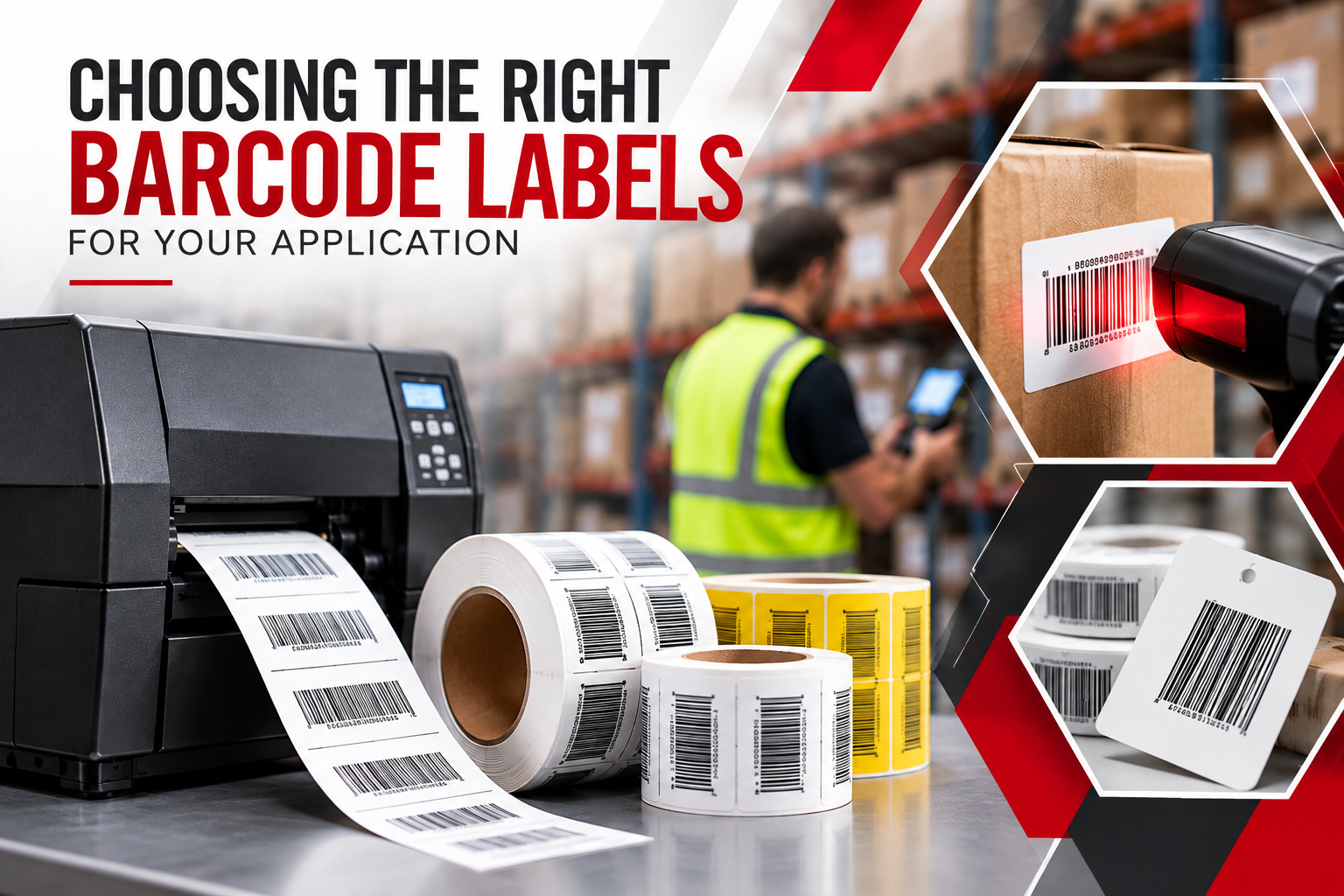
Barcode labels and tags play an important role in tracking products, materials, and assets throughout daily operations. However, not all barcode media is designed for the same conditions. A label that works well on a cardboard box in a warehouse may not hold up on steel stored outdoors or on products exposed to moisture and extreme temperatures. Selecting the right barcode media requires understanding how it will be used, where it will be applied, and how long it needs to remain readable.

Choosing the wrong media can result in damaged labels, scanning failures, lost inventory, and unnecessary labor costs. By evaluating the requirements of each application, businesses can select barcode labels and tags that support reliable tracking without spending more than necessary.

What Factors Should You Consider When Choosing Barcode Media?

Barcode media includes adhesive labels and nonadhesive tags available in different materials, sizes, colors, and printing formats. These options allow businesses to customize their labeling solutions based on their specific tracking requirements. Several factors determine which type of media will perform best.

  • Color: Color-coded labels and tags can help employees visually identify inventory categories, product types, or processing stages. This can be particularly useful in facilities handling large quantities of similar materials.
  • Adhesive: Different surfaces and environments require different adhesives. Permanent, removable, and specialty adhesives are available depending on whether a label needs to withstand long-term handling, temperature changes, or exposure to moisture.
  • Material: Paper labels are commonly used for general-purpose applications, while synthetic materials such as polyester and polypropylene provide greater resistance to moisture, chemicals, and physical wear. The material should match the expected lifespan of the label and the conditions it will encounter.
  • Size: Barcode size depends on the available surface area, the information being encoded, and the distance from which it will be scanned. Barcodes must be large enough and printed clearly enough for the scanning equipment being used.
  • Printing Method and Ribbon: Direct thermal printing is commonly used for short-term applications such as shipping labels. Thermal transfer printing uses a ribbon to transfer the image onto the label and can provide greater durability. Ribbon formulations, including wax, wax/resin, and resin, offer different levels of resistance to abrasion, chemicals, and heat.

These characteristics work together to determine how well a barcode performs. For example, choosing a durable synthetic label may not solve the problem if the adhesive cannot bond to the intended surface or the printed barcode cannot withstand the environment.

How Does the Environment Affect Barcode Media Selection?

The conditions a barcode encounters throughout its lifecycle are important when selecting labels and tags. Indoor and outdoor applications have different requirements, and factors such as sunlight, moisture, temperature changes, chemicals, and repeated handling can affect barcode readability.

The surface receiving the label also matters. Adhesives that bond well to smooth glass or metal may not perform the same way on textured plastic, unfinished wood, or dusty surfaces. According to 3M, selecting the right adhesive for a label requires considering the surface material, environmental conditions, and performance requirements to ensure proper adhesion.

In some applications, a hanging or attached tag may be more appropriate than an adhesive label. Businesses should also consider how far away the barcode will be scanned, since scanning distance, barcode dimensions, print quality, and scanner capabilities all affect readability. According to GS1 US, barcode size, color contrast, print quality, and placement all play an important role in ensuring barcodes scan correctly and efficiently.

Another consideration is how long the barcode needs to remain intact. A shipping label may only need to survive a few days, while an asset identification label could remain in use for years. Understanding the complete tracking process helps determine the level of durability needed without paying for materials that exceed the application's requirements.

Barcode Media Requirements Across Different Industries

Different industries face unique labeling challenges, and even businesses within the same industry may require different types of barcode media depending on their workflows.

Food and Beverage: Products may move through refrigerated storage, freezing temperatures, humid environments, and transportation before reaching their destination. Labels must remain attached and readable despite these conditions to support inventory management, product identification, and traceability.

Steel Manufacturing: Steel products often encounter rough handling, high temperatures, outdoor storage, and exposure to moisture. Depending on where identification occurs in the production process, facilities may require heat-resistant tags, durable synthetic labels, or other specialty media capable of surviving demanding conditions.

Wood and Lumber: Unfinished wood presents challenges because of its rough texture, dust, moisture content, and exposure to outdoor conditions. Traditional adhesive labels may not bond reliably to these surfaces, making specialty adhesives or attached tags more suitable for certain applications.

Chemical Manufacturing: Containers and materials may be exposed to chemicals, moisture, and temperature fluctuations. Labels must be selected based on the substances and conditions they will encounter, particularly when identification needs to remain intact during storage, handling, and transportation.

Warehousing and Distribution: Barcode labels support receiving, inventory management, picking, packing, and shipping. While standard paper labels may be sufficient for many applications, reusable containers, returnable assets, and products exposed to frequent handling may require more durable materials and adhesives.

In each of these environments, barcode media must remain functional throughout the required tracking process. Evaluating those conditions before selecting materials helps prevent identification problems as products move between locations or stages of production.

The Cost of Choosing the Wrong Barcode Media

Barcode media is often evaluated based on its initial purchase price, but the lowest-cost option is not always the most economical. Labels that peel off, fade, tear, or become unreadable can interrupt operations and create expenses that exceed the savings from purchasing less expensive materials.

When a barcode cannot be scanned, employees may need to manually identify products, reprint labels, investigate inventory discrepancies, or locate missing items. In manufacturing environments, these interruptions can delay production or shipping. In warehouses and distribution facilities, they can affect order accuracy and inventory visibility. If a product loses its identification during transportation, tracing it back to its original location or shipment may become difficult.

Selecting media that matches the application helps reduce these problems. The objective is not to purchase the most durable or expensive label available, but to identify a cost-effective solution that will perform reliably for as long as the application requires.

Working With an Experienced Barcode Media Provider

Selecting the right barcode media involves more than comparing label materials and prices. Surface compatibility, environmental exposure, printing requirements, scanning distance, and expected lifespan must all be considered to determine which solution will work best.

Taylor Data Systems helps businesses evaluate these requirements and identify barcode labeling solutions suited to their operations. With a media specialist bringing 28 years of industry experience to the team, TDS offers practical knowledge of the materials, adhesives, and printing options available for different applications.

Making the right media selection from the beginning can help businesses reduce relabeling, avoid tracking errors, control operating costs, and maintain more efficient workflows.

Explore our barcode printing supplies and labeling solutions or contact Taylor Data Systems to discuss your application and find the right barcode media for your business.


Frequently Asked Questions About Barcode Media

What is the difference between barcode labels and barcode tags?

Barcode labels typically have an adhesive backing and are applied directly to products, packaging, or equipment. Barcode tags are generally nonadhesive and can be attached using ties, fasteners, or other methods. Tags are often used when a surface is unsuitable for adhesive labels or when materials require identification during demanding manufacturing or storage processes.

How do I choose the right barcode label material?

The right barcode label material depends on the surface it will be applied to, environmental conditions, and how long it needs to remain readable. Paper labels are often suitable for short-term indoor applications, while synthetic materials such as polyester and polypropylene offer greater resistance to moisture, chemicals, and wear.

What is the difference between direct thermal and thermal transfer barcode labels?

Direct thermal printing uses heat-sensitive media that darkens when heated by the printhead, making it suitable for many short-term labeling applications. Thermal transfer printing uses a ribbon to transfer the printed image onto the label. When paired with appropriate media and ribbons, thermal transfer printing provides greater resistance to fading, abrasion, and environmental exposure.

Can barcode labels be customized for different applications?

Yes. Barcode labels can be customized by size, color, material, adhesive, and printing method to meet specific operational requirements. For example, a manufacturing facility may require durable labels with permanent adhesive, while a distribution center may use color-coded labels to help employees identify inventory categories.

What happens if a business uses the wrong barcode media?

Using unsuitable barcode media can cause labels to peel, fade, tear, or become unreadable. These failures can lead to scanning errors, inaccurate inventory records, additional labor for relabeling, and delays in production or shipping. Choosing media based on the application's requirements helps reduce these problems and maintain reliable product tracking.


5 Questions to Ask Before Investing in Barcode and RFID Technology

5 Questions to Ask Before Investing in Barcode and RFID Technology

Investing in new technology is one of the most effective ways businesses working in manufacturing, warehousing, transportation & logistics, and field...

Read More
Honeywell Granit Ultra 2105i Rugged Scanner

Honeywell Granit Ultra 2105i Rugged Scanner

The steady beep of a scanner might seem like background noise, but for the people running warehouses, factories, or distribution centers, it is the...
Read More
Building Smarter RFID Tracking Workflows

Building Smarter RFID Tracking Workflows

Warehouse and industrial operations are under more pressure than ever to improve inventory accuracy, reduce manual processes, and maintain real time...

Read More